Progress rarely starts with certainty
For nearly two centuries, Denmark has built institutions where science moves beyond theory and into society. From laboratories and lecture halls to startups and global companies.
Across generations, researchers, founders and investors have carried the same ambition forward: to turn curiosity into technology, and technology into progress.
Like the startups we have supported, we have gone through our own pivots along the way.
From DTU Innovation to PSV. From state-backed to independent. From a singular model to a venture house built across multiple stages and technologies.
This is the story of our evolution.
1829
It all starts with the spark of an idea
In 1829, a period marked by emerging technologies and profound societal change, Denmark makes a bold bet to establish the very first advanced engineering education.

At the center stands H.C. Ørsted, the scientist who uncovers electromagnetism and demonstrates that invisible forces shape the physical world. Ørsted believes that knowledge should move from theory to practice, from laboratory to society – and he dares to imagine a new kind of education.
These thoughts form the foundation of a new institution. This institution is what we today know as DTU - Denmark’s Technical University. At its core is a mission to develop science, engineering and technology for the benefit of society. This becomes the north star of the university and goes on to shape the environment we grow out of.
2003
2001
A new chapter in Danish innovation history begins
In 2001, a shift begins to take shape at DTU.
Under the leadership of President Lars Pallesen, DTU begins to look beyond the laboratory. Inspiration comes from the United States, where universities have already started to turn research into companies, patents and new industries.
The question of what it takes to do the same on Danish soil begins to emerge.

Together with leading Danish industrial companies such as Danfoss, Danisco, NKT, Grundfos, Radiometer and Novo Nordisk, DTU brings capital, networks and intent closer to the university. A first step toward building an environment where technology can move from discovery to company.
This ignites a mindset shift. From research as an endpoint to research as a starting point.
2003

2001-2018
Laying the foundation
But a mindset alone is not enough.
At the turn of the millennium, brilliant ideas exist, yet the path from invention to company remains uncertain and rarely travelled. Early-stage capital is scarce, and few are willing to take the first risk.
So the system begins to respond.
In 2001, the Danish government launches the Innovation Incubator Scheme — a national effort to bridge the gap between invention and investment by taking that first risk.
Across the country, four innovation environments are appointed to carry this forward: Borean Innovation, CAPNOVA, Syddansk Innovation and DTU Innovation.
Here, we begin operating as DTU Innovation, a state-backed venture arm focused on turning early-stage technologies into investable companies.
Over time — together with the other incubators — we become a cornerstone of Denmark’s early-stage ecosystem, helping lay the foundation for a new generation of tech companies.
2003
Building a venture engine
As the Innovation Incubator Scheme takes shape, we begin to formalise our approach to investing.
Around this time, we transition from DTU Innovation to PreSeed Innovation — marking a shift where we widen our scope beyond the university to include the broader Danish startup ecosystem.
A close collaboration between PreSeed Innovation and Seed Capital is established, enabling broader value chain coverage and a clear focus on quality, speed, and market relevance.
What begins as individual bets on promising technologies evolves into a more structured way of building companies — combining capital, early conviction, and hands-on involvement.
Over the years that follow, we help launch and invest in more than 450 startups emerging from universities and the broader Danish ecosystem.Some remain early experiments. Others grow into companies that go on to define entire categories.
halli hallo
2003
Building a venture engine
As the Innovation Incubator Scheme takes shape, we begin to formalise our approach to investing.
Around this time, we transition from DTU Innovation to PreSeed Innovation — marking a shift where we widen our scope beyond the university to include the broader Danish startup ecosystem.
A close collaboration between PreSeed Innovation and Seed Capital is established, enabling broader value chain coverage and a clear focus on quality, speed, and market relevance.
What begins as individual bets on promising technologies evolves into a more structured way of building companies — combining capital, early conviction, and hands-on involvement.
Over the years that follow, we help launch and invest in more than 450 startups emerging from universities and the broader Danish ecosystem. Some remain early experiments. Others grow into companies that go on to define entire categories.
Trustpilot
Sometimes, a bright mind comes along with a problem that genuinely unsettles him. The founder of Trustpilot is one of them.
As the internet grows, trust becomes harder to navigate. Consumers move blindly, while companies struggle to prove they are worth trusting.
So he builds something.
An attempt to make trust visible again — measurable, comparable, and able to move across borders without losing its meaning.
These are the first thoughts behind what becomes Trustpilot. A company that goes on to make online trust tangible for businesses and consumers across the world.
In 2021, Trustpilot is listed on the London Stock Exchange, valuing the company at around $1.5 billion.
Veo
Sometimes the idea for a company begins with a missed moment.
In 2015, one of the founders of Veo misses his son’s football match, arriving just after his son scores a goal he never gets to see.
The moment lingers.
On professional pitches, everything is recorded. But across local fields, the games disappear the moment they are played.
So a simple question emerges: why aren’t all football matches recorded?
That question becomes Veo — an AI-powered camera capable of recording an entire game without a camera operator. What begins with one missed goal goes on to make millions of matches visible.
Glycom
Sometimes breakthroughs begin with a simple observation: nature has already solved the problem.
Human milk contains complex molecules that help shape an infant’s immune system — yet for years, they remain nearly impossible to reproduce.
In 2005, a team of glucose researchers and chemists from DTU sets out to change that.
Glycom develops a platform to produce these molecules at scale, translating advanced glycobiology into industrial biotechnology.
In 2020, the company is acquired by Royal DSM for €765 million — one of the largest biotech exits in Denmark at the time.
A reminder that deep science, given enough patience, can travel a long way from the laboratory.
Seaborg Technologies / Saltfoss Energy
Some ideas return long after the world first imagined them.
In the 1950s, scientists explore nuclear reactors based on molten salt — a concept with the potential for safer and more efficient energy. But the technology is never fully pursued.
Decades later, two Danish physicists revisit the idea.
In 2014, they found Seaborg Technologies to rethink the concept for a modern energy system, developing compact reactors designed to provide stable, emissions-free power.
The work continues today under the name Saltfoss Energy.
Times of change 2017-2020

2018
PSV Academy
Over the years, something else begins to accumulate alongside the portfolio: experience.
Across hundreds of investments, we see the same patterns repeat themselves: early excitement, difficult pivots, fragile first teams, the long road toward product–market fit, founder burnout. Some companies grow into global successes. Others never make it past the early stages. But each journey adds another layer of understanding.
Much of what founders need cannot be found in term sheets or investment models. It lives in conversations, in mistakes made before, in the quiet knowledge passed between people who have already walked the path.
From this realisation, we establish PSV Academy.
A learning space for emerging founders, designed to share the collective experience of more than 450 founder journeys — translating tacit knowledge into practical insight for the next generation of technology entrepreneurs.
PSV Academy grows into a structured learning environment built on both scale and continuity. Across 37 StartupTalks, the Academy engages around 6,000 participants, creating a recurring forum where founders, operators, and investors share practical, experience-based insights.
At the same time, Open Door sessions offer more intimate, one-on-one guidance for early-stage founders navigating validation, positioning, and readiness for investment.
Beyond live interactions, the Academy establishes a persistent learning layer through a digital platform, where founders can revisit content and dive deeper into curated themes spanning the startup journey, from idea validation and team formation to fundraising, product–market fit, and founder resilience.
In 2017, we take a decisive step.
PreSeed Innovation becomes PreSeed Ventures, marking a transition from a state-backed setup to an independent venture investor. At the same time, Christel Piron steps in as CEO, helping lead the transformation and set a new direction for the organisation.
Our ambition remains clear: to continue backing founders at the earliest stages through capital, experience and active ownership.
2003
2017
From PreSeed Innovation to PreSeed Ventures
A shift is underway.
After years of helping build Denmark’s early-stage ecosystem, it becomes clear that the Innovation Incubator Scheme is nearing its end. The state-backed model that shaped an entire generation of venture building is on its way out, and a new question begins to emerge: what comes next?

In 2017, we take a decisive step.
PreSeed Innovation becomes PreSeed Ventures, marking a transition from a state-backed setup to an independent venture investor. At the same time, Christel Piron steps in as CEO, helping lead the transformation and set a new direction for the organisation.
Our ambition remains clear: to continue backing founders at the earliest stages through capital, experience and active ownership.
2003
2018
The Innovation Incubator Scheme closes shop
In 2018, the Innovation Incubator Scheme enters its formal phase-out as part of a broader restructuring of Denmark’s public funding landscape.
By then, the ecosystem has matured, and the landscape around early-stage funding looks different than it once did. But as the state-backed model is phased out, an important part of the early-stage support system disappears with it.
This marks a pivotal moment for our future.
In 2017, we take a decisive step.
PreSeed Innovation becomes PreSeed Ventures, marking a transition from a state-backed setup to an independent venture investor. At the same time, Christel Piron steps in as CEO, helping lead the transformation and set a new direction for the organisation.
Our ambition remains clear: to continue backing founders at the earliest stages through capital, experience and active ownership.
2003
Closing gaps in the ecosystem
How do we close the gap left behind by the Innovation Incubator Scheme? Where do founders turn for the right kind of support when they lack a roadmap to move beyond that fragile pre-seed stage and navigate the messy middle?
We know from experience that founders need more than capital. They need sparring, experience and perspective. They need someone who understands the journey and its many twists and turns.
From this, the idea of a fund dedicated to the pre-seed stage takes shape.
PreSeed Innovation transitions into PreSeed Ventures, marking a shift from a state-backed setup to an independent venture investor. At the same time, Christel Piron steps in as CEO, leading the transformation and setting a new direction for the organisation.
Our ambition is clear: to continue supporting founders at the earliest stages through capital, experience and active ownership.
2003
Times of change
2017: From PreSeed Innovation to PreSeed Ventures
A shift is underway.
After years of helping build Denmark’s early-stage ecosystem, it becomes clear that the Innovation Incubator Scheme is nearing its end. The state-backed model that shaped an entire generation of venture building is on its way out, and a new question begins to emerge: what comes next?
2018
PSV Academy
Over the years, something else begins to accumulate alongside the portfolio: experience.
Across hundreds of investments, we see the same patterns repeat themselves: early excitement, difficult pivots, fragile first teams, the long road toward product–market fit, founder burnout. Some companies grow into global successes. Others never make it past the early stages. But each journey adds another layer of understanding.
Much of what founders need cannot be found in term sheets or investment models. It lives in conversations, in mistakes made before, in the quiet knowledge passed between people who have already walked the path.
From this realisation, we establish PSV Academy.
A learning space for emerging founders, designed to share the collective experience of more than 450 founder journeys — translating tacit knowledge into practical insight for the next generation of technology entrepreneurs.
PSV Academy grows into a structured learning environment built on both scale and continuity. Across 37 StartupTalks, the Academy engages around 6,000 participants, creating a recurring forum where founders, operators, and investors share practical, experience-based insights.
At the same time, Open Door sessions offer more intimate, one-on-one guidance for early-stage founders navigating validation, positioning, and readiness for investment.
Beyond live interactions, the Academy establishes a persistent learning layer through a digital platform, where founders can revisit content and dive deeper into curated themes spanning the startup journey, from idea validation and team formation to fundraising, product–market fit, and founder resilience.
2003
2019-2023
PSV appointed exit operator
Following the political decision to phase out the Innovation Incubator Scheme, the responsibility for managing and divesting the remaining portfolio moves to tender.

We are awarded the mandate to act as exit operator for the Danish state, overseeing the structured exit of the remaining companies.
The mandate builds on our long-standing involvement with the portfolio, deep company insight and extensive early-stage investment experience.
2018
2020-present
A Venture House is born
Through more than 400 founder journeys, we have built capabilities that go beyond investing alone — spanning company building, operational support and everything in between.
Building on these capabilities, we want to do more. We want to keep closing the gaps we see in the ecosystem and bring our experience into new areas.
From that onset a new ambition begins to take shape. So we begin to think differently about how we operate.
2020
A Venture House takes shape
Through more than 450 founder journeys, we build capabilities that extend beyond investing alone, spanning company building, operational support and everything in between.
Building on these capabilities, we push further. We keep closing the gaps we see in the ecosystem and bring our experience into new areas. From this, a new ambition begins to take shape. We start to rethink how we operate.
With that shift, the idea of a venture house takes form. An infrastructure from which new structures can grow, built on a shared way of thinking and driven by the ambition to help founders build companies that matter.
Pressed Ventures transitions into PSV marking a shift from operating as a singular unit to acting as one connected system.
2003
2020
PSV Tech I is established
Rooted in the lack of institutional capital to support bold, early ideas, the first Danish venture fund with institutional backing dedicated to the pre-seed stage comes to life.
PSV Tech I, a €55 million venture fund, is established to back ambitious tech startups from Denmark and Southern Sweden.
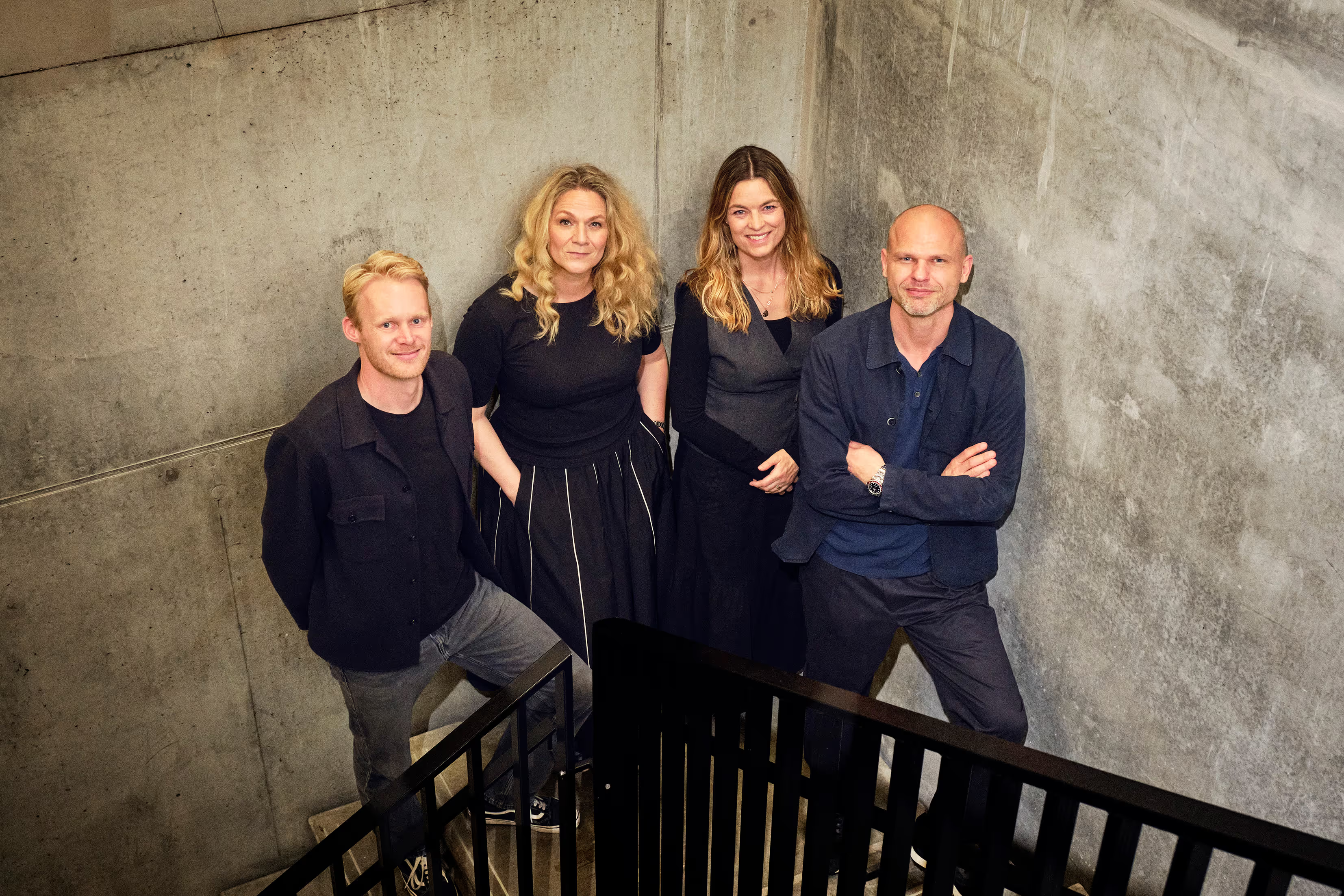
To lead the effort, four general partners come together: Christel Piron, Helle Uth, Richard Breiter, and Alexander Viterbo-Horten.
With decades of experience, the team backs the next generation of software-powered technology companies as they move from first proof to models that can be repeated, scaled, and trusted.
2003
2020
The idea of a deep tech fund takes shape
From the beginning, the ambition reaches beyond software.
Over the years, we work closely with founders building technologies rooted in engineering, materials, energy and life sciences. Companies that carry the potential to reshape industries — but also require something different.
More time. More capital. A deeper understanding of the technology itself.
Not all companies follow the same path from idea to scale. Some move faster, with clearer routes to market. Others unfold more gradually, shaped by technical complexity and longer development cycles.
At the same time, DTU, with Anders Bjarklev at the helm, continues to push an ambitious innovation agenda, playing an instrumental role in shaping the foundation for a more dedicated deep tech effort, which would later become PSV Hafnium.
The contours of a complementary approach begin to emerge.
We leave operating as a singular unit, and welcome the thought of doing so as one connected system.
And with that, the idea of a venture house begins to take form: an infrastructure from which new structures can grow. Built on the same underlying way of thinking anchored in the ambition to help founders build companies that matter.
2003
2020
The idea of a deep tech fund takes shape
From the beginning, the ambition reaches beyond software.
Over the years, we had worked closely with founders building technologies rooted in engineering, materials, energy and life sciences. Companies that carried the potential to reshape industries — but also required something different.
More time. More capital. And a deeper understanding of the technology itself.
Not all companies follows the same path from idea to scale. Some moves faster, with clearer routes to market. Others unfold more gradually, shaped by technical complexity and longer development cycles.
The contours of a more dedicated approach begin to emerge, and the idea of a dedicated deep tech fund is born.

2023
More than 100 exits
Over the years following the phase-out of the Innovation Incubator Scheme, we work through the remaining state-backed portfolio as appointed exit operator.
In total, more than 100 companies are exited through sales, ownership transitions or responsible closures.
The process marks the final chapter of the incubator era — bringing two decades of early-stage investments to a close and returning close to DKK 1 billion to the Danish state.
It also leaves us with something else: deep experience in how startups evolve, succeed, fail and mature over time.
Experience that carries into our next chapter.
2003
2024
PSV Hafnium is established
In 2024, Denmark’s first dedicated deep tech venture fund becomes a reality.
PSV Hafnium is established to support science-based companies operating at the frontier of technology — ventures rooted in advanced engineering, energy systems, hardware, materials science and other capital-intensive fields.
These are companies that require something different: patient capital, deep technical insight and long-term commitment.
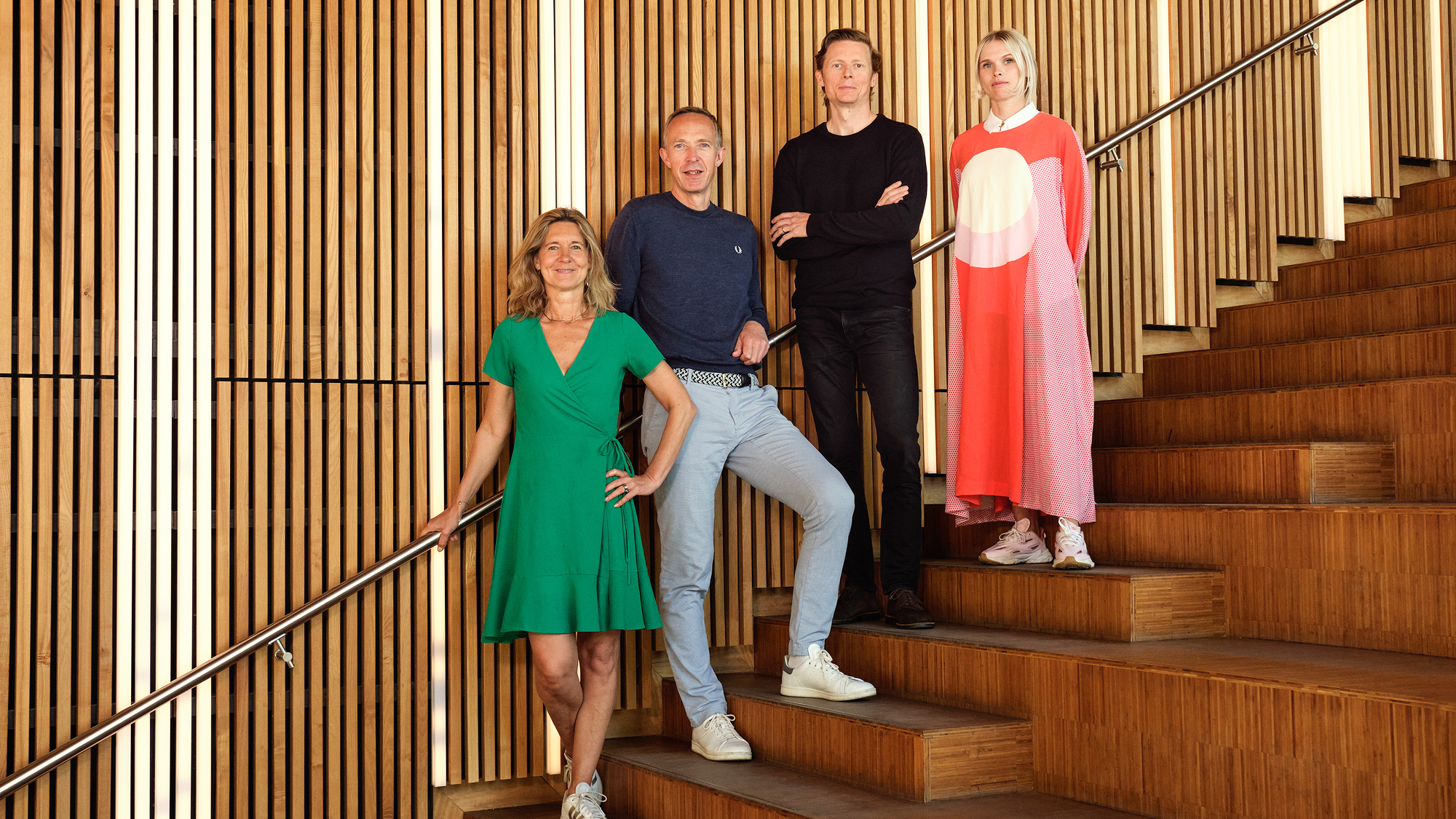
PSV Hafnium supports early inventions rooted in science and engineering — providing the capital and expertise needed to turn them into globally competitive companies with real-world impact.
PSV Hafnium is led by partners Marianne Hyltoft, Anders Kjær, Jakob Rybak-Andersen and Maria Emilie Kath Danø.
2003
2025
PSV Tech II is launched
What began as a response to a gap in early-stage venture capital had proven its relevance.
Through Tech I, we had seen firsthand that bold, early ideas, when met with conviction, experience, and the right kind of support, could evolve into scalable and globally relevant companies. The need we set out to address was real, and it continued to grow.
It is on this foundation that PSV Tech II is built.

2025
PSV Tech II is launched
What begins as a response to a gap in early-stage venture capital proves its relevance.
Through Tech I, we see firsthand that bold, early ideas, when met with conviction, experience, and the right kind of support, can evolve into scalable and globally relevant companies. The need we set out to address is real and continues to grow.
On this foundation, PSV Tech II takes shape.
A continuation of the model built on what we learn. Strengthening our ability to support founders from the earliest stages, while staying true to the principles that shape Tech I.
With Tech II, we double down on what works. Getting behind Nordic tech founders’ vision before others.
2003
2025
DTU SkyFactory sees lift-off
DTU SkyFactory is launched with PSV Foundry as a founding partner, representing a more integrated approach to venture creation anchored at the Technical University of Denmark.
DTU SkyFactory is established to accelerate the journey from research to company formation, creating a structured environment where scientific discovery, entrepreneurial talent and venture capital converge — shortening the distance from startup to scaleup.
By bringing venture building closer to the research environment, DTU SkyFactory reinforces DTU’s role not only as a leading technical university, but as an active engine of company creation and technological impact.

As a founding partner, we contribute with more than two decades of experience in supporting and commercialising innovation.
The commitment reflects a shared long-term aim to translate world-class research into globally competitive companies.
2025
2026
25 years of PSV
What begins as a state-funded experiment in early-stage innovation grows into a venture house shaped by decades of founders, technologies and ideas.

More than 450 companies later, our mission remains unchanged: to clear the path for founders who build companies that matter.
Across PSV Foundry, PSV Tech and PSV Hafnium, we continue to explore new ways of supporting those founders, combining capital, experience and curiosity to strengthen the ecosystem in which companies are built and grow.
Together, we can punch above our weight.